Every job below is one we do ourselves across Miramar.
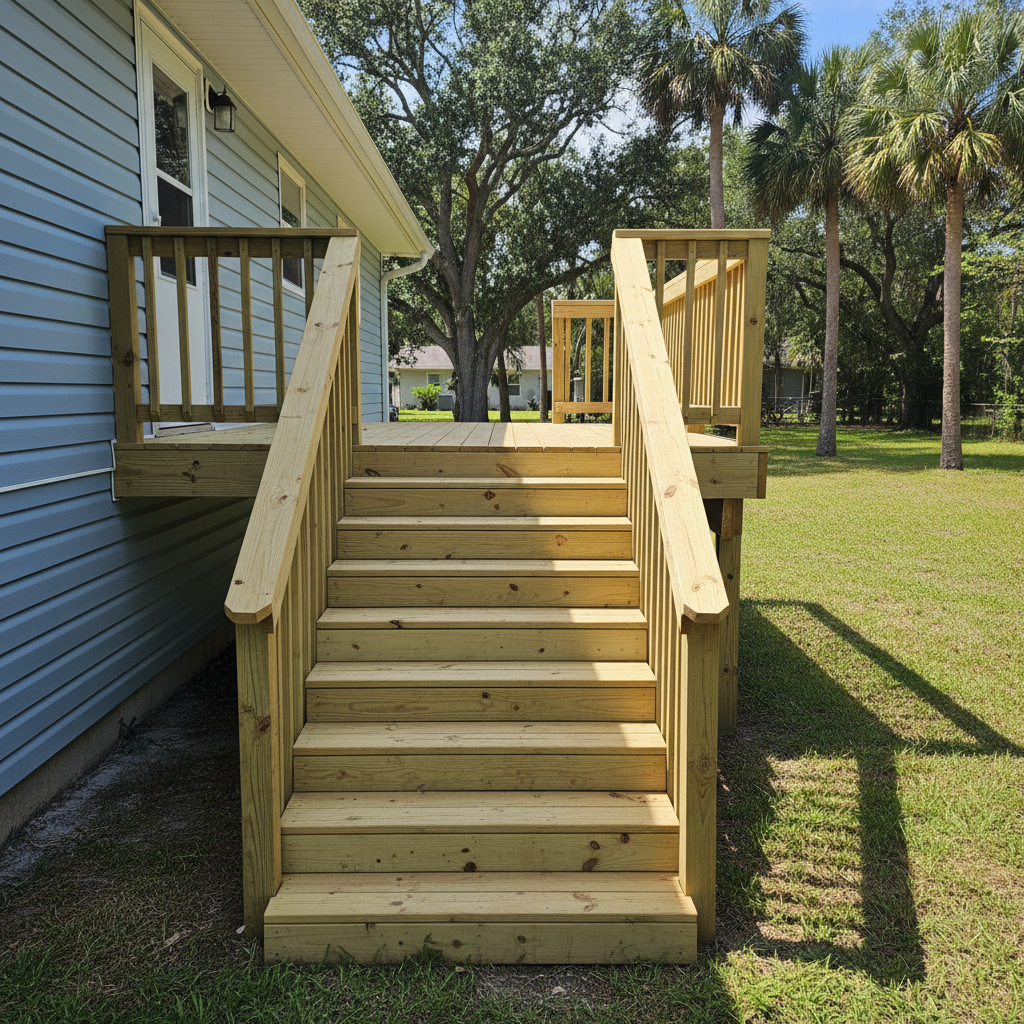
We frame new decks with pressure-treated joists and beams sized to the actual span, not just whatever lumber is on the truck. Footings go below grade and get inspected before any decking goes down. You pick the board, we handle the layout, the fastening pattern and the railing height code requires.
Soft spots in the decking, sagging joists and rotted ledger boards are the three calls we get the most. We replace what's failed and check the framing underneath it, because a new board over a rotten joist just hides the problem for another year. Most repairs we can quote on the spot after we get under the deck with a flashlight.
Florida sun breaks down a clear sealer in about a year, faster on boards that face west. We pressure wash first, let the wood dry out fully, then apply a stain and sealer rated for UV and standing humidity. Skipping the dry time is the most common reason a stain job peels within months.
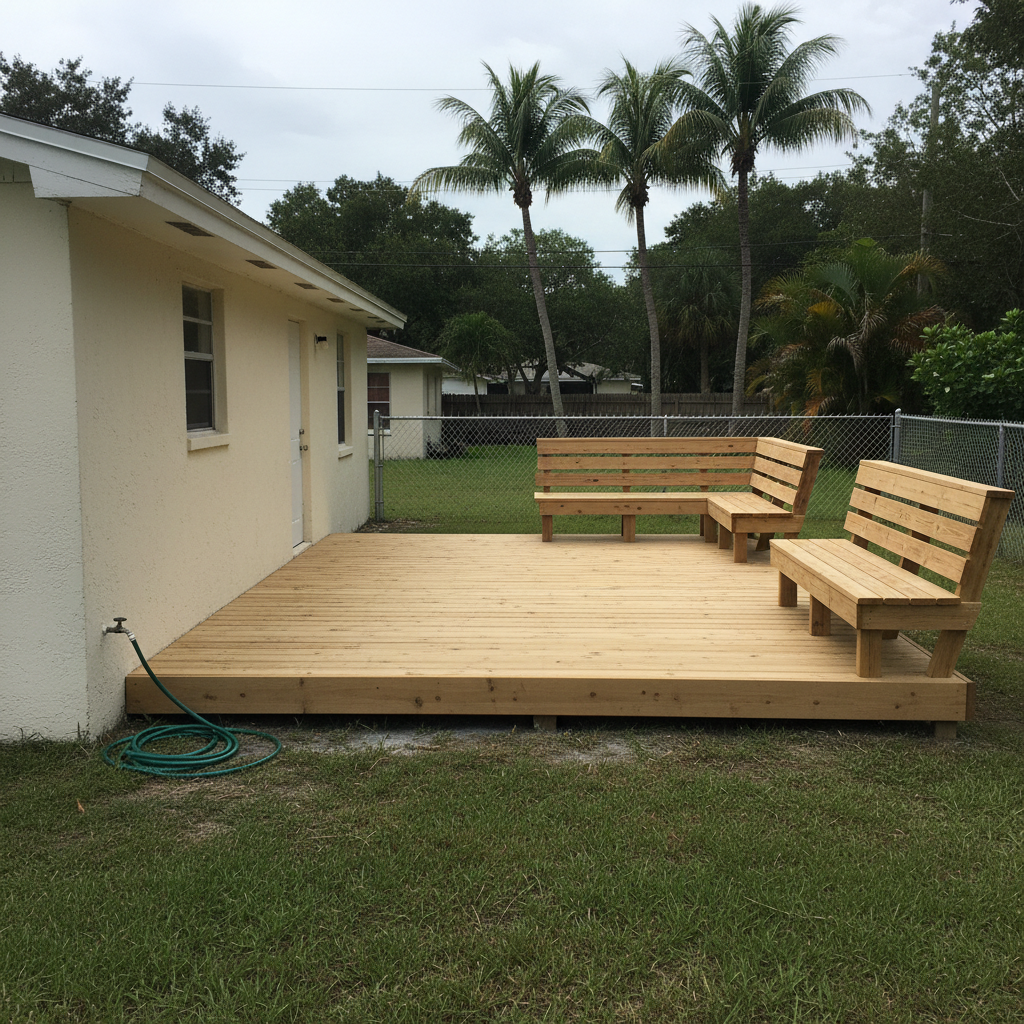
Multi-level decks, built-in benches, pergolas and odd-shaped lots are where this gets interesting. We'll draw the layout, size the footings and beams for it, and walk you through what the city will approve. Some designs need an engineer's sign-off before the permit office will touch them, and we'll tell you upfront if yours does.
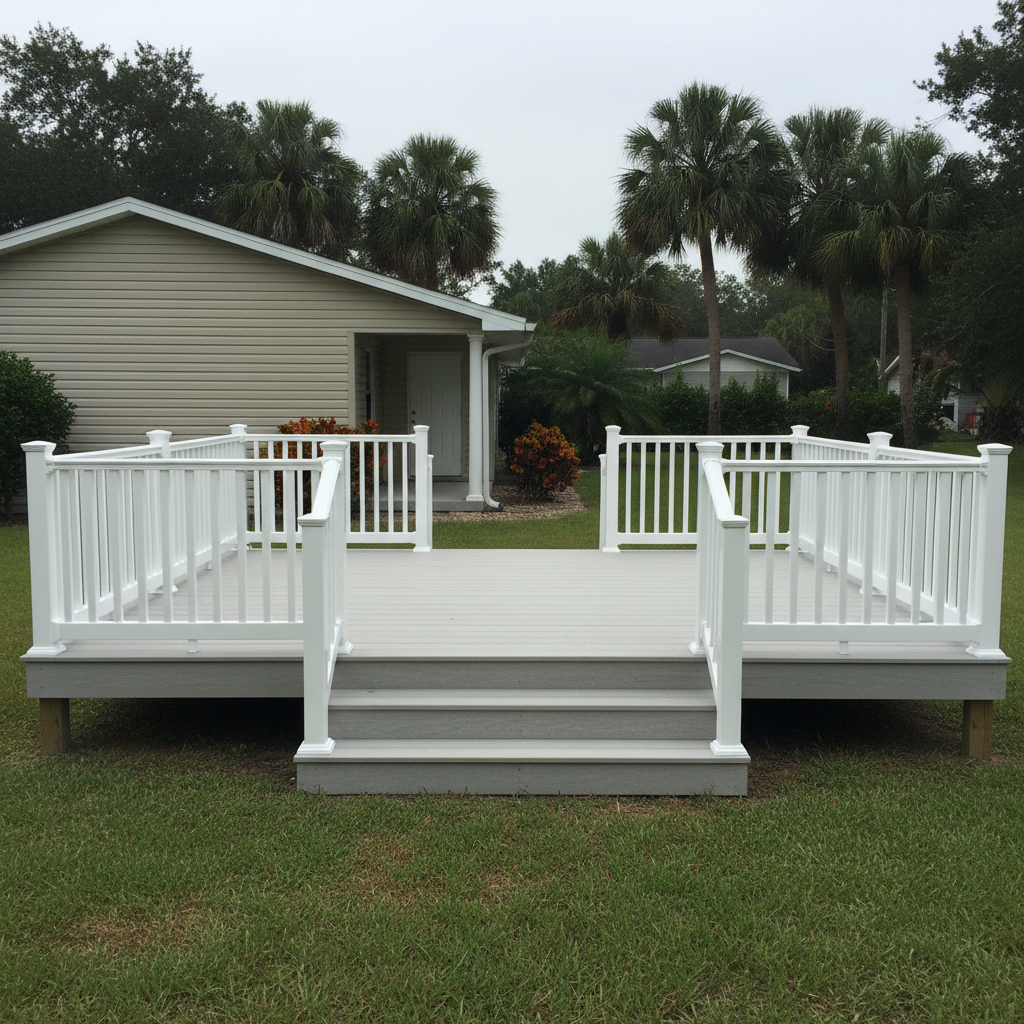
Composite boards don't rot, but they expand and contract more than wood with Florida's temperature swings, so gapping and fastener spacing matter more, not less. We use hidden fastener systems on most composite jobs so you don't see screw heads across the whole deck. It costs more upfront than pressure-treated pine, usually pays off in the maintenance you skip.
Pool decks take more splash, chlorine and bare feet than a backyard deck, so the surface has to be slip-resistant even wet. We grade the deck boards or finish surface away from the pool edge so water drains instead of sheeting back toward the house. Coping and expansion joints around the pool shell get handled separately from the deck framing.
A loose railing post is usually a sign the blocking behind it failed, not just the hardware. We rebuild the post connection to the frame first, then install or repair the railing itself, whether that's wood baluster, cable or aluminum. Baluster spacing gets set to pass the 4-inch sphere rule most inspectors check for.
If the frame underneath is still sound but the boards are cupped, splintered or just outdated, we strip the old decking and install new boards on the existing structure. We check every joist for rot and soft spots before anything new goes down. This runs faster and cheaper than a full rebuild when the frame's still good.
A screen cage keeps the no-see-ums and mosquitoes off a deck without blocking the breeze. We frame the enclosure to tie into the existing deck structure and the house, and size the screws and anchors for South Florida wind loads instead of whatever a screen panel kit comes with. On bigger cages we usually coordinate with a licensed screen enclosure specialist.
Old decks get torn out when the frame's too far gone to save or when the footprint is changing entirely. We pull the fasteners instead of just prying boards loose, so we're not leaving nail heads buried in the yard. Haul-off is included, and we'll flag if the old footings can be reused or need to come out too.
Four steps, and no surprises in any of them.
You tell us what you want doing, we look at what is actually there, and we ask the awkward questions early.
In writing, itemised, free. If something might add cost later we flag it now rather than at the end.
Same crew throughout. We cover your floors, keep the dust down and tidy up before we leave each day.
You point out anything you are not happy with and we fix it before the invoice, not after.
Where we take on deck projects across Broward County.
Questions that come up once a deck project is underway.
Describe the problem and we will tell you what it probably is. No obligation.